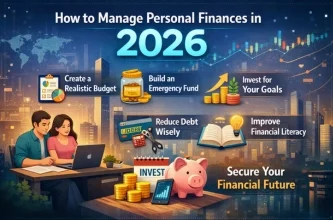
Managing personal finances has become more important than ever in 2026. With rising living costs, changing investment opportunities, and evolving financial systems, individuals must take a structured approach to budgeting, saving, investing, and managing debt. Personal finance refers to the way individuals manage their income, expenses, savings, investments, and financial planning to achieve long-term financial stability and independence.
Experts consistently emphasize that disciplined financial habits—such as budgeting, saving, and investingform the foundation of long-term wealth creation. When practiced consistently, these habits help individuals manage income effectively, prepare for emergencies, and steadily grow their assets over time.
This article explores practical strategies for managing personal finances in 2026 and provides actionable tips to help individuals build a secure financial future.
Understanding the Core Components of Personal Finance
Personal finance involves several interconnected components that collectively determine financial health. These components include budgeting, saving, investing, debt management, and financial protection through insurance.
Budgeting is considered the backbone of financial planning because it helps individuals track their income and expenses. Without a budget, it becomes difficult to control spending or allocate money toward long-term goals. Savings, on the other hand, provide financial security and help individuals prepare for unexpected situations such as job loss, medical emergencies, or sudden expenses.
Investing is another key component of personal finance because it allows money to grow through compound returns over time. By combining budgeting, saving, and investing, individuals can gradually build wealth and improve their financial stability.
Key Elements of Personal Finance
| Component | Description | Importance |
|---|---|---|
| Budgeting | Tracking income and expenses | Prevents overspending and improves financial control |
| Saving | Setting aside money for emergencies or goals | Provides financial security and stability |
| Investing | Growing wealth through assets like stocks or funds | Builds long-term financial growth |
| Debt Management | Managing loans and credit responsibly | Reduces financial stress and interest costs |
| Insurance | Protecting against financial risks | Safeguards assets and income |
Create a Realistic Budget for 2026
One of the most effective ways to manage personal finances is to create a realistic budget. A well-structured budget allows individuals to understand exactly where their money is going and identify areas where spending can be reduced.
Financial planners often recommend the 50/30/20 budgeting rule as a simple framework for managing income. According to this method, approximately 50% of income is allocated to essential needs such as housing, groceries, and transportation, 30% to lifestyle expenses or wants, and 20% to savings or debt repayment.
Budgeting also encourages mindful spending and helps prevent impulse purchases. By reviewing monthly expenses and adjusting spending habits, individuals can maintain better control over their financial situation.
Example of a Monthly Budget Allocation
| Category | Percentage of Income | Example (₹50,000 Income) |
|---|---|---|
| Needs | 50% | 25,000 |
| Wants | 30% | ₹15,000 |
| Savings / Debt | 20% | ₹10,000 |
A structured budgeting system helps maintain financial discipline and ensures that savings and investments remain a consistent priority.
Build an Emergency Fund
An emergency fund is one of the most critical pillars of personal finance. It acts as a financial cushion that protects individuals from unexpected expenses such as medical emergencies, job loss, or urgent repairs.
Financial experts recommend keeping emergency savings separate from regular spending accounts to ensure that the funds remain available when needed. Even a modest emergency fund can prevent individuals from relying on high-interest loans or credit cards during difficult situations.
In general, financial planners suggest building an emergency fund that covers three to six months of living expenses. This level of preparedness can significantly reduce financial stress and provide greater financial stability during uncertain times.
Shift From Saving to Goal-Based Investing
While saving money is essential, relying solely on savings accounts may not generate sufficient long-term growth. Inflation gradually reduces the purchasing power of money, making it important to invest surplus funds in growth-oriented assets.
Recent financial trends show that households are increasingly moving away from traditional savings toward investments such as mutual funds, shares, and pension plans to build long-term wealth.
Goal-based investing involves aligning investments with specific financial objectives such as retirement, education, home ownership, or wealth creation. By clearly defining these goals, individuals can select investment strategies that match their time horizon and risk tolerance.
Examples of Common Investment Goals
| Financial Goal | Time Horizon | Typical Investment Options |
|---|---|---|
| Emergency Savings | Short Term | Savings accounts, liquid funds |
| Buying a Home | Medium Term | Balanced funds, fixed deposits |
| Retirement Planning | Long Term | Equity funds, pension plans |
| Education Planning | Medium to Long Term | Mutual funds, bonds |
Investing early also allows individuals to benefit from compounding, where earnings generate additional earnings over time.
Improve Financial Literacy and Decision-Making
Financial literacy plays a critical role in effective money management. Individuals who understand financial concepts such as budgeting, interest rates, and investment risk are better equipped to make informed decisions.
Research shows that financial literacy encourages better saving and investing behavior while helping individuals manage complex financial decisions and avoid financial risks.
Learning about personal finance can involve reading educational resources, following credible financial publications, or using digital financial tools that track spending and provide insights into financial habits. Developing financial knowledge empowers individuals to evaluate financial products carefully and avoid costly mistakes.
Reduce Debt and Manage Credit Responsibly
Debt management is another crucial aspect of personal finance. While certain types of debt—such as mortgages or education loansmay contribute to long-term financial growth, high-interest debt can significantly reduce financial progress.
Managing debt involves paying bills on time, limiting credit card balances, and prioritizing repayment strategies. Methods such as the debt snowball or debt avalanche approach are commonly recommended to systematically reduce outstanding balances.
Maintaining low debt levels not only improves financial stability but also enhances credit scores, which are essential for accessing loans or other financial opportunities.
Automate Savings and Investments
Automation is becoming an increasingly popular strategy for managing personal finances. By automatically transferring a portion of income into savings or investment accounts, individuals can ensure consistent financial progress without relying on manual effort.
Automated systems remove the temptation to spend money that should be saved and help maintain financial discipline. Over time, regular contributions—even small ones—can accumulate into substantial wealth through compounding. Automation also simplifies financial planning because individuals no longer need to make repeated decisions about when and how much to save.
Monitor and Review Financial Progress Regularly
Financial planning is not a one-time activity. Instead, it requires regular monitoring and adjustments to reflect changes in income, expenses, or life circumstances. Individuals should periodically review their financial goals, investment portfolios, and spending patterns.
This review process helps identify potential risks and opportunities, ensuring that financial strategies remain aligned with long-term objectives. Regular financial reviews also help individuals stay motivated and maintain accountability in their financial journey.
Conclusion
Managing personal finances in 2026 requires a balanced approach that combines budgeting, saving, investing, and responsible debt management. By creating a realistic budget, building an emergency fund, investing for long-term goals, and improving financial literacy, individuals can develop a strong foundation for financial stability.
Consistent financial habits play a crucial role in achieving long-term financial success. Small but disciplined actionssuch as tracking expenses, automating savings, and reviewing financial goals—can gradually lead to significant wealth accumulation over time. Ultimately, personal finance is not about short-term gains but about building sustainable financial security. With careful planning and informed decision-making, anyone can take control of their financial future and achieve lasting financial independence.